 Become a member
 Donate
Right now, it's legal to release balloons in NSW.
Our MP Emma Hurst is fighting in parliament to change that, but she needs your help. Add your voice to our petition to ban balloon releases in NSW.
Balloons are released in moments of celebration. Birthdays, weddings, memorials. But what happens after they float away means everything to wildlife.
Released balloons can travel hundreds of kilometres before they fall into oceans, waterways, beaches, and parklands where animals feed. Wildlife and other animals have no idea what they are, only that they look like food. Some even feed balloon fragments to their young. To a seabird scanning the surface for squid, a deflated balloon looks like prey. Unlike hard plastic, it stretches and compacts inside the gut. It doesn't pass through. It blocks. It kills. For others, the danger is entanglement, ribbons and strings that wrap around wings and limbs, cutting off the ability to fly, swim, or feed.
Balloons are listed as a priority threat to NSW's oceans, waterways and marine life, yet NSW is one of the last places in Australia without a ban.
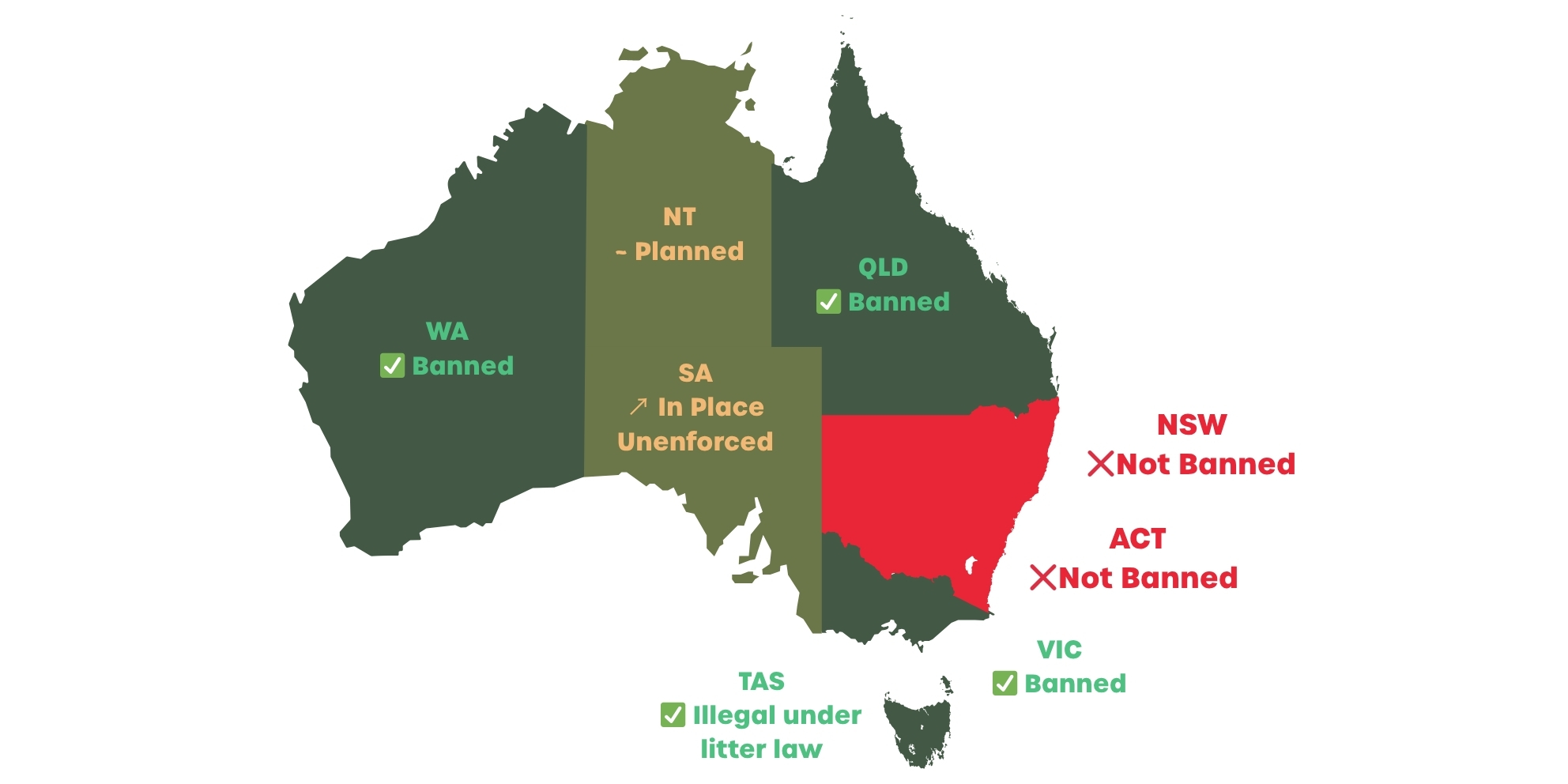
State after state is acting - NSW still hasn't banned balloon releases
25,777balloons, clips & ribbons collected from Australian beaches (2017–2022) |
|
Up to 19balloons still legally releasable at once in NSW |
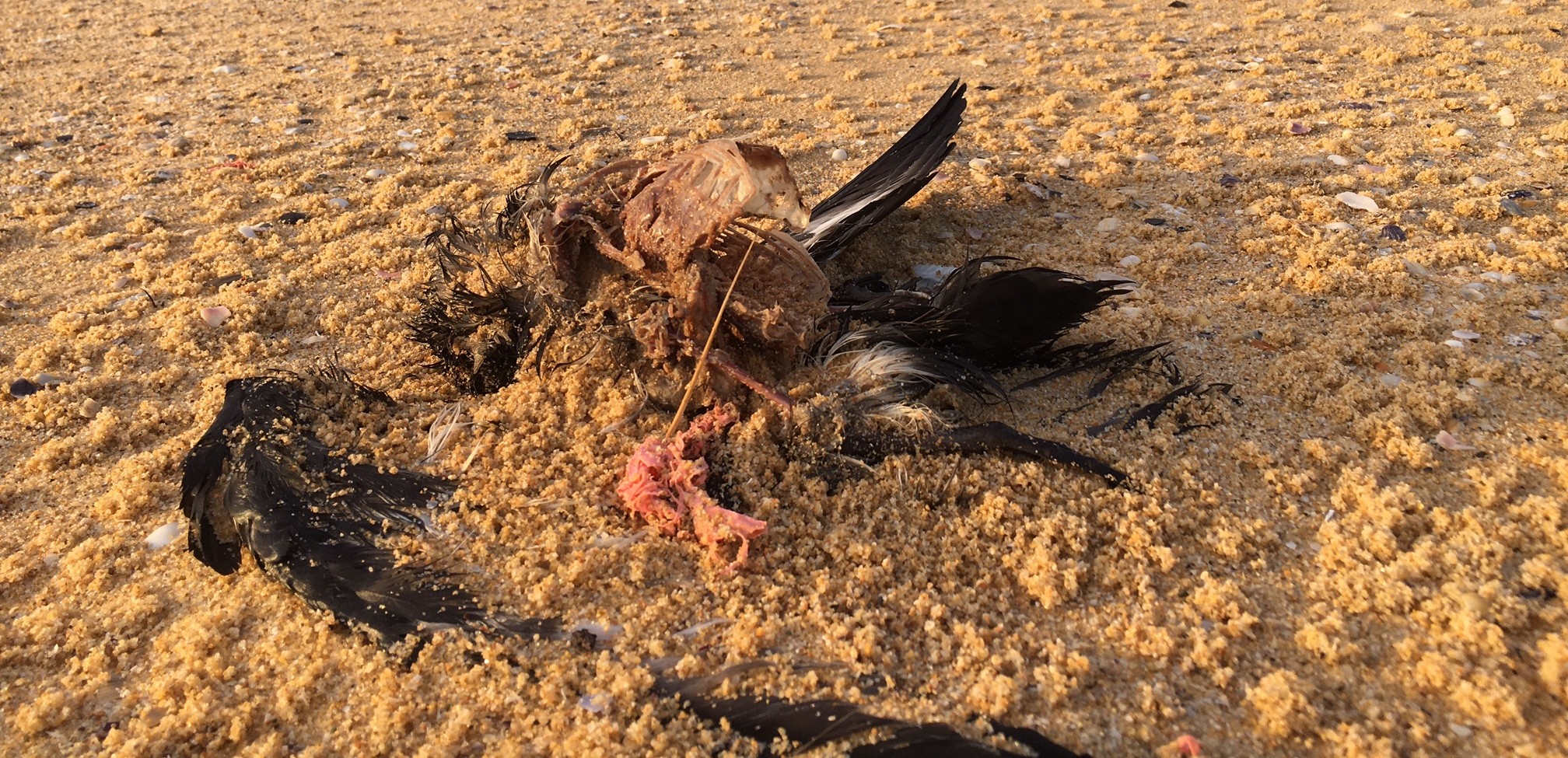
Image: Petrel found dead with a pink balloon in its stomach. South Coast NSW. Source: No Balloon Release Australia
Every balloon released is a threat to an animal somewhere.
🐢 Wildlife ingestion & death
Turtles, penguins, petrels, and shearwaters mistake balloons for food. Once swallowed, a balloon blocks the intestinal tract or damages internal organs and frequently kills. Wildlife carers must spend enormous resources treating animals that never should have encountered this debris.
🦅 Entanglement & injury
The plastic ribbons and clips attached to balloons are just as dangerous. Wildlife can become entangled, preventing them from flying, swimming, or feeding. Clips cause choking and organ damage. The whole product, balloon, ribbon, clip, becomes a hazard the moment it is released.
🌊 Marine debris
The NSW Department of Climate Change, Energy, the Environment and Water's Marine Debris Threat and Risk Assessment (2022) identifies balloons as a priority threat. Latex can take years to biodegrade. Foil balloons break into microplastics and stay in the environment forever. Both pollute our oceans and waterways.
♻️ The government's own policy makes this indefensible
The NSW Government has committed to phasing out single-use items that pollute and can't be recovered. A released balloon, whether plastic or latex, fits that description exactly. The government's own environmental commitments demand action.
Balloons are 32 times more likely to kill a seabird than hard plastic. They are the deadliest debris item in our oceans.
(CSIRO, 2019)
NSW is being left behind
Victoria was the first to act, banning balloon releases from 1 July 2021 under the Environment Protection Act 2017. Western Australia followed from 1 January 2022, and Queensland introduced an explicit ban on releasing lighter-than-air balloons in September 2023 via an amendment to its Waste Reduction and Recycling Act 2011. Tasmania also treats balloon releases as illegal under the Litter Act 2007, with penalties and fines for mass releases. The Northern Territory has a ban planned. South Australia addresses balloon releases under its litter laws, however there is no enforcement.
NSW remains among the last to act, still permitting up to 19 balloons to be released at once, despite the harm to animals and the environment.
|
Queensland ✓ Banned Explicit ban in effect since 1 September 2023 |
Victoria ✓ Banned Ban in effect since 1 July 2021 under the Environment Protection Act 2017 |
Western Australia ✓ Banned Ban in effect since 1 January 2022 |
|
Tasmania ✓ Illegal under litter law Balloon releases illegal under the Litter Act 2007 |
South Australia ⚠ Unenforced Balloon releases considered littering, however there is no enforcement |
Northern Territory ~ Planned Ban planned |
|
NSW ✗ Not banned Up to 19 releases permitted - legislation not yet updated |
ACT ✗ Not banned Same allowance as NSW - up to 19 releases permitted |
Balloon release bans also exist across eleven US states including California, and over 80 local councils in the UK have banned releases on public land.
Sources:
- NSW's Plastics Plan 2.0
- CSIRO, 2019
- Plastic Reduction and Circular Economy Act 2021
- Marine Debris Threat and Risk Assessment (2022)
- No Balloon Release Australia


